
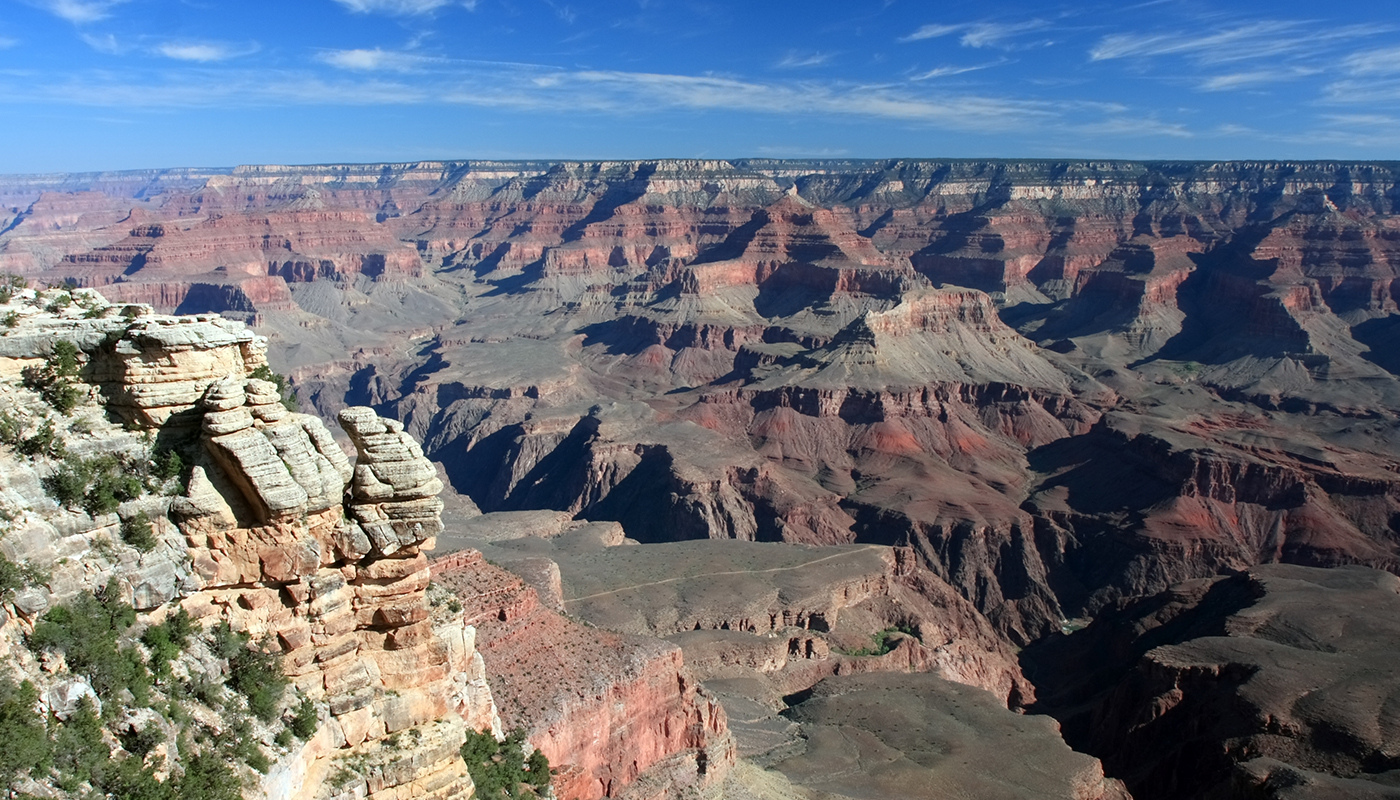
Arizona has only three sites formally designated as National Parks, but the state also contains National Monuments, Historic Sites, Recreation Areas and other federally protected places. Altogether, the source lists 31 nationally designated sites across Arizona, covering desert landscapes, Indigenous history, archaeological remains, canyons and mountain environments.
For a first trip, the most useful selection is one that combines Arizona’s major landscapes with sites that are reasonably straightforward to visit. The following ten destinations provide a broad introduction to the state, from the Grand Canyon and Colorado River country to ancient settlements and less familiar desert parks.
1. Grand Canyon National Park
The Grand Canyon is the obvious starting point for newcomers. The canyon follows 277 miles of the Colorado River, averages about one mile in depth and reaches almost 18 miles across in some locations. The park also has extensive visitor infrastructure, including viewpoints, lodging, campgrounds, and accessible trails, making it suitable even for travelers who are not planning long hikes.
2. Glen Canyon National Recreation Area
Near Page in northern Arizona, Glen Canyon National Recreation Area combines Colorado River scenery with easy access to several recognizable landmarks. Horseshoe Bend is the best-known viewpoint, while the Glen Canyon Dam Overlook provides another canyon perspective with potentially fewer visitors. Lake Powell, hiking trails, and the Hanging Gardens Trail add enough variety to make the area worth more than a quick photo stop.
3. Canyon de Chelly National Monument
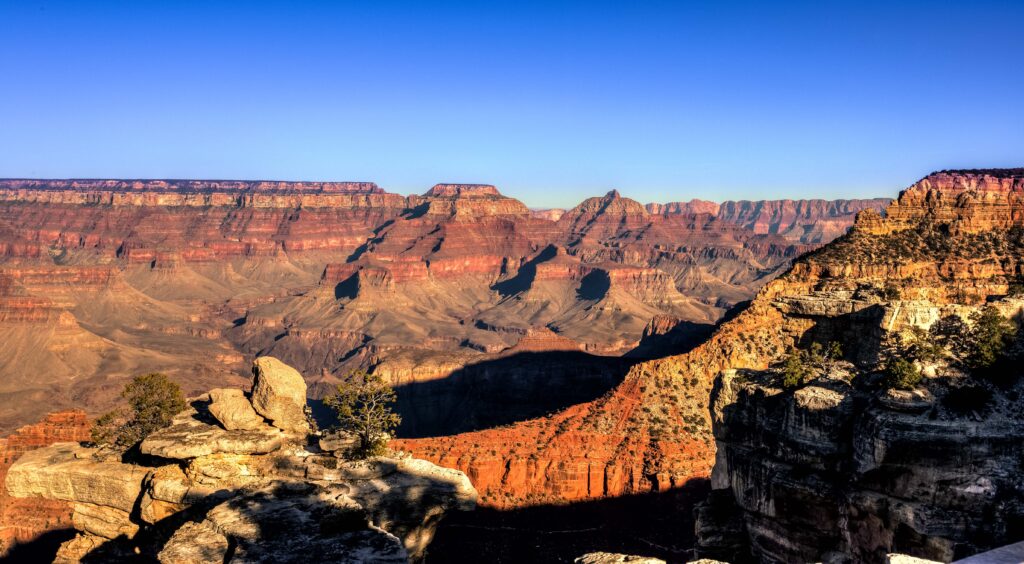
Canyon de Chelly is particularly valuable for travelers interested in both landscape and Indigenous history. The red rock canyon has been continuously inhabited for more than 5,000 years and lies within the Navajo Nation. Scenic drives connect several overlooks, many of which are accessible, while hikes into the canyon require a park ranger or Navajo guide.
4. Chiricahua National Monument
For hiking and unusual geology, Chiricahua National Monument stands apart from Arizona’s more familiar desert scenery. A volcanic eruption roughly 27 million years ago helped create the tall rock formations that now define the landscape. The monument contains about 17 miles of hiking trails and an eight-mile paved scenic drive, giving first-time visitors several ways to explore without committing to a difficult backcountry route.
5. Casa Grande Ruins National Monument
Located roughly midway between Phoenix and Tucson, Casa Grande Ruins National Monument is one of the easiest historical sites to add to an Arizona road trip. The monument preserves remains associated with an ancient farming community of the Sonoran Desert, including structures dating to the mid 1400s. Guided tours, picnic areas and visitor facilities make the stop relatively simple to organize.
6. Agua Fria National Monument
Agua Fria National Monument offers a more undeveloped experience only about 40 miles north of Phoenix. The protected area covers roughly 70,000 acres and includes mesas, the Agua Fria River canyon, petroglyphs, and the remains of Pueblo La Plata. Hiking, mountain biking, and camping are possible, but there are no visitor services, so water and other supplies need to be brought independently.
7. Coronado National Memorial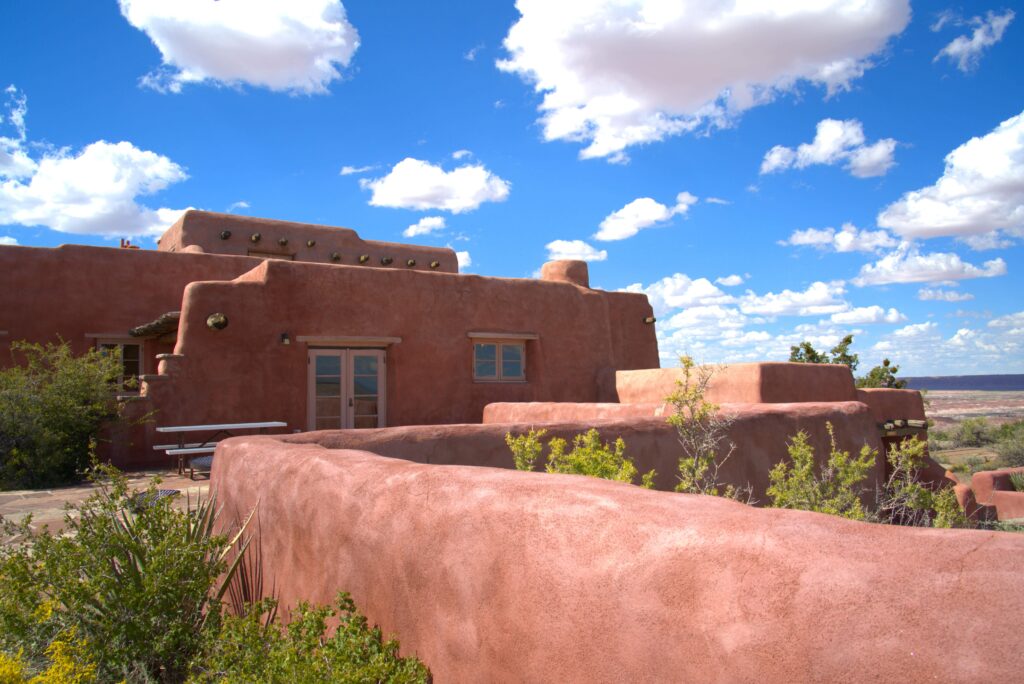
Southern Arizona looks quite different from the canyon country farther north, and Coronado National Memorial provides a useful introduction to that landscape. The area combines history connected with the Coronado Expedition of 1540 to 1542 with four ecological zones, including Sonoran Desert, Chihuahuan Desert, and mountain environments. Hiking, birding, cave exploration, and the views from Coronado Peak are the main reasons to include it.
8. Fort Bowie National Historic Site
Fort Bowie is a better choice for travelers interested in Arizona history than for those seeking dramatic scenery alone. Apache Pass and Fort Bowie were associated with almost 25 years of conflict between the Chiricahua Apache and the U.S. Army during the late nineteenth century. Most visitors reach the fort ruins and visitor center via a 1.5-mile hike from the parking area.
9. Arizona National Scenic Trail
The Arizona National Scenic Trail is not a conventional park but offers one of the broadest introductions to the state’s landscapes. The trail runs for more than 800 miles from the Mexican border to Utah and is divided into 43 passages. Newcomers therefore do not need to attempt a long-distance hike; a single section can provide access to mountains, desert, and areas near several other protected sites.
10. Hohokam Pima National Monument
Hohokam Pima National Monument protects the location of Snaketown, one of the largest known ancient Hohokam settlements. The archaeological site itself is closed to visitors to protect its fragile remains, so this is a different kind of stop from the other destinations on the list. Travelers can instead visit the nearby Huhugam Heritage Center, where artifacts including pottery, stone bowls and bone objects provide context for Hohokam culture.
For first-time visitors, these Arizona national parks and monuments show why the state cannot be reduced to the Grand Canyon alone. Large canyon landscapes, volcanic rock formations, desert ecosystems, and archaeological sites can all be combined within the same trip, while the mix of heavily developed parks and quieter monuments makes it possible to adjust the itinerary to available time and preferred travel style.